Dryer fires are not usually caused by defective equipment. They are caused by missed maintenance. Lint accumulates inside the vent line with every load, and over time that accumulation restricts airflow, raises temperatures, and creates conditions where a single cycle can ignite what has built up in the duct. The fix is straightforward. The problem is that most homeowners do not know the vent needs attention until something goes wrong.
This article covers what to look for, what makes vents clog faster, and what a proper cleaning actually includes.
What the Fire Data Shows
According to the National Fire Protection Association, dryers account for the large majority of fires involving dryers and washing machines combined. Failure to clean is the leading contributing factor in dryer fires, and lint is the leading item first ignited.
These are not freak accidents in neglected homes. They are the predictable result of a duct that was not serviced on a reasonable schedule. The risk is real, well-documented, and almost entirely preventable.
Mike, our Owner and Operator, says: “In almost thirty years of doing this work, I have never seen a dryer fire that surprised me. When you look at the vent afterward, the reason is always right there. It just needed to be cleaned.”
The Signs Your Vent Is Restricted
- Clothes are taking two full cycles to dry completely. This is the most common sign, and homeowners often explain it away for months before calling.
- The dryer itself, or the laundry room, feels unusually hot during a cycle. A dryer that cannot exhaust heat properly radiates it outward instead.
- A burning or musty smell occurs during or after a cycle. A burning smell means lint is getting warm enough to scorch. A musty smell can mean moisture is being trapped in the duct rather than exhausted.
- Lint is accumulating around the dryer door seal or behind the machine on the floor. Lint that cannot move through the duct finds somewhere else to go.
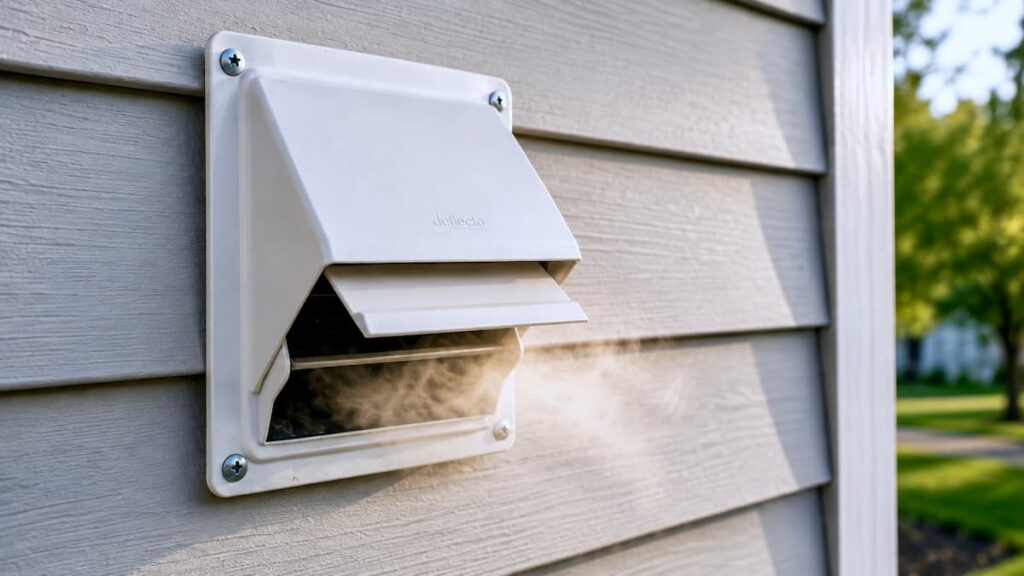
- Airflow at the exterior hood is weak or absent when the dryer is running. You should be able to feel a solid flow of warm air from the outside termination point during a cycle.
- The exterior flap doesn't open when the dryer runs. A flap that stays closed means no air is moving through the duct.
- Cycle times have been getting gradually longer over the past several months. This one is easy to miss because it happens slowly, but a dryer that used to finish a load in 45 minutes and now takes 70 is telling you something.
Mike suggests doing the exterior check yourself the next time your dryer is running. Walk outside, find the termination point, and see whether the flap is open and whether you can feel airflow. If you can’t, call someone.”
What Makes a Vent Clog Faster

Some homes accumulate lint in the duct faster than others, usually because of a combination of factors rather than any single one.
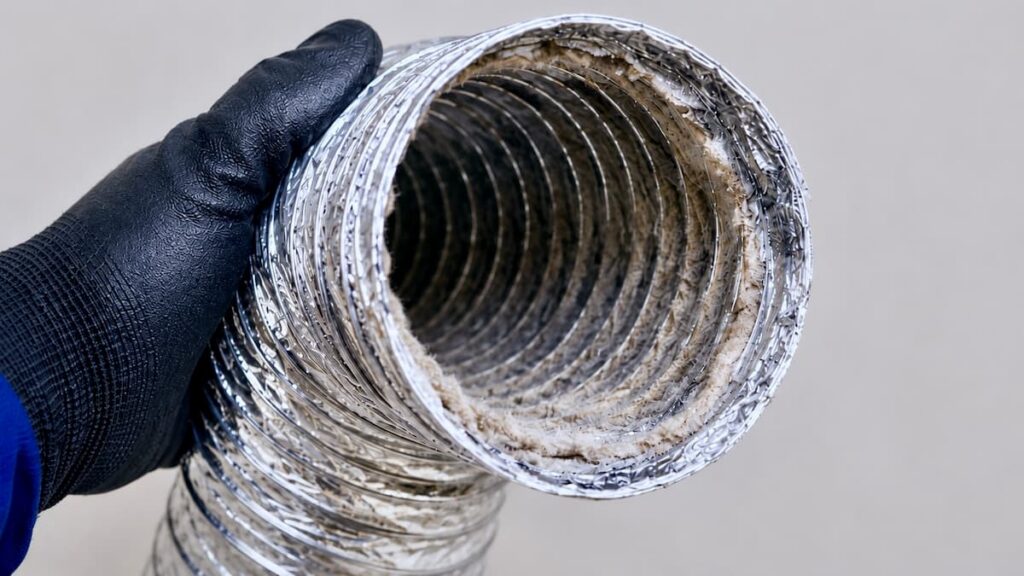
Long vent runs with multiple elbows reduce airflow velocity and give lint more places to slow down and settle. Flexible foil or vinyl transition duct, the accordion-style connector behind the dryer, traps lint in its ridges in a way that rigid metal duct does not. Vents that terminate in an attic, a crawlspace, or a soffit rather than directly outdoors violate code in most jurisdictions and create maintenance problems in every one. Screens or wire cages over the exterior hood catch lint rather than letting it pass, and they are not permitted on dryer terminations. Second-floor or interior laundry rooms almost always require longer vent runs to reach an exterior wall, and longer runs mean more buildup. Homes with pets load the vent faster because pet hair and dander mix with lint and create denser buildup.
Any one of these extends your effective cleaning interval. Together, several of them can make annual cleaning a minimum, not a suggestion.
The Connecticut Factor
This is worth its own section because it is genuinely specific to the homes we service across Fairfield, Litchfield, and New Haven Counties.
Older housing stock in Connecticut often means a basement laundry room with a long retrofit run to reach an exterior wall, sometimes threading through finished spaces with multiple turns along the way. Renovated homes that moved laundry upstairs to a second-floor hall closet often didn’t redesign the vent path to match, so the new location exhausts through a run that was never intended for it.
Both situations tend to create more length and more bends than current code allows, which restricts airflow even when the duct is clean.
Cold weather adds another variable. When warm, moist air from the dryer meets a cold duct wall in an uninsulated run through a basement or exterior chase, condensation forms inside the duct and lint sticks to the wet surface rather than passing through. Connecticut winters make this a real seasonal factor, not a theoretical one.
Mike notes: “We go into a lot of older homes around here where the vent was installed whenever the house was built, and nobody has touched it since. The duct material is wrong, the run is too long, and it’s been accumulating for years. Cleaning it is only part of the answer. Sometimes the vent itself needs to be rerouted.”
How Vents Are Supposed to Be Built
Most duct cleaning companies clean and leave. We think it is worth understanding what a correctly built vent system looks like, because the cleaning conversation and the installation conversation are often related.
Dryer vents should be constructed of rigid metal duct, smooth on the interior, with no sheet metal screws protruding into the duct where lint can catch. The transition piece connecting the dryer to the wall should be a semi-rigid metal connector, not flexible vinyl or foil accordion duct. The exterior termination should be a louvered hood that opens freely when the dryer runs and closes when it stops, with no screen or cage over the opening.
Vent length is governed by the International Residential Code as adopted by Connecticut, with a maximum equivalent length that accounts for the number of elbows in the run, since each bend reduces the system’s effective capacity. When a vent run exceeds the code limit, a booster fan may be installed, though it adds a maintenance point and is not a substitute for proper routing.
If Dependable finds during a cleaning visit that the vent configuration contributes to the restriction, we will tell you plainly and explain the options. We would rather give you that information than clean a duct that will clog again in six months because the underlying setup is wrong.
How Often
Annually is the right interval for most households. Homes with heavy use, multiple occupants, pets, or a longer-than-standard vent run should consider every six months. This maintenance interval is based on the lint accumulation rate, a predictable physical process. This differs from condition-based guidance for air duct cleaning, where the EPA advises cleaning only when specific problems exist. The two are not the same service, and the cleaning intervals are not comparable.
What a Proper Cleaning Includes
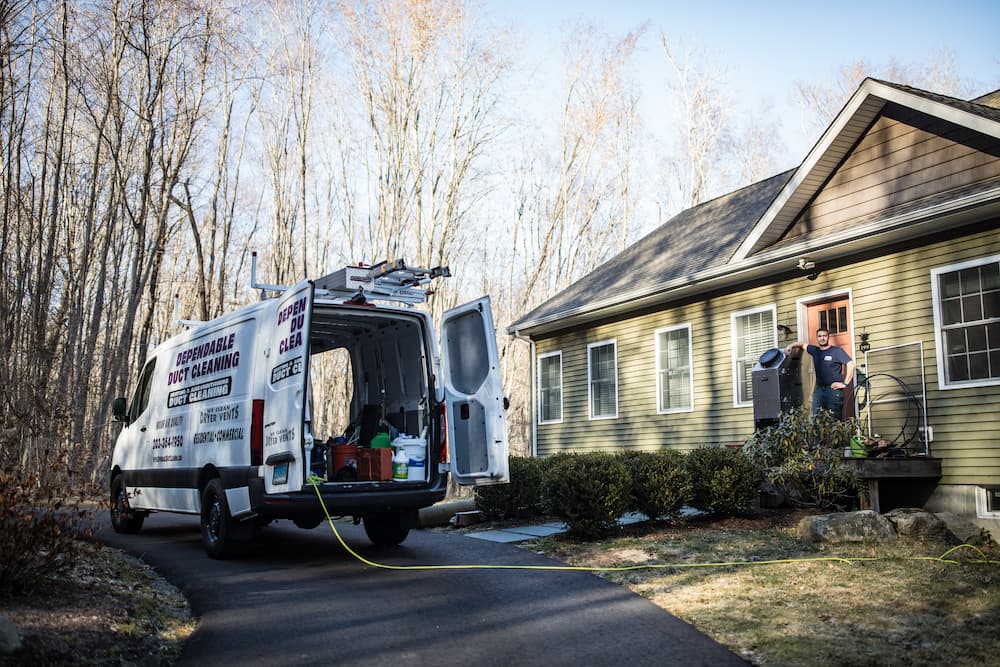
A thorough dryer vent cleaning covers the complete run from the back of the dryer to the exterior termination point. That means disconnecting the dryer from the wall, cleaning the transition duct and the area behind the machine, running a rotary brush with a vacuum through the full duct length, inspecting the exterior hood and confirming the flap opens and closes freely, and verifying airflow at the termination point after the work is done.
A company that vacuums from one end without a rotary brush has not cleaned the run. A company that doesn’t disconnect the machine hasn’t cleaned behind it. Ask before you book.
Mike is direct about this: “There are people in this business who do a partial job and call it done. We don’t work that way. If we’re cleaning your vent, we’re cleaning the whole thing, and we’re showing you the airflow at the end so you can see the difference.”
Lint Trap Cleaning Is Not the Same Thing
Cleaning the lint screen after every load is necessary and good practice. It does not address what has accumulated in the duct run behind the machine and through the wall. These are two separate things.
One additional note: dryer sheets leave a residue that builds up on the lint screen over time and reduces its airflow even when it looks clean. Holding the screen under running water will show you whether water passes through freely or sheets off the surface. If it sheets off, the screen needs a gentle scrub with dish soap. This is not a substitute for vent cleaning, but it is worth knowing.
Frequently asked questions
Annually for most households. More frequently for homes with heavy use, pets, or a vent run that is longer than standard.
Clothes taking two cycles to dry, a dryer or laundry room that feels unusually hot, a burning or musty smell during a cycle, lint collecting around the door seal or behind the machine, weak airflow at the exterior hood, and cycle times that have gradually increased over months.
A brush kit can help with maintenance between professional cleanings. Still, it will not reach every section of a long or multi-elbow run, assess the condition of the duct material, or verify airflow at the termination point. A professional cleaning covers the full run and catches installation problems that a brush kit will miss.

Schedule Your Dryer Vent Cleaning
If two or more warning signs in this article apply to your home, your vent needs service. If you are not sure when it was last cleaned, that is reason enough to have someone take a look.
Dependable Duct Cleaning cleans dryer vents for homeowners throughout Fairfield County, Litchfield County, and New Haven County, CT. We also offer residential air duct cleaning and can assess both systems in a single visit if needed.
Schedule a free in-home estimate or call us at (203) 364-1950. We will tell you honestly what we find.