
Blog Post

Dryer Vent Fire Hazards: What Every CT Homeowner and Property Manager Needs to Know

Your dryer works hard. Load after load, year after year, it’s one of the most-used appliances in any home or multi-unit building. And every single time it runs, it generates something you can’t see but absolutely cannot ignore: lint.

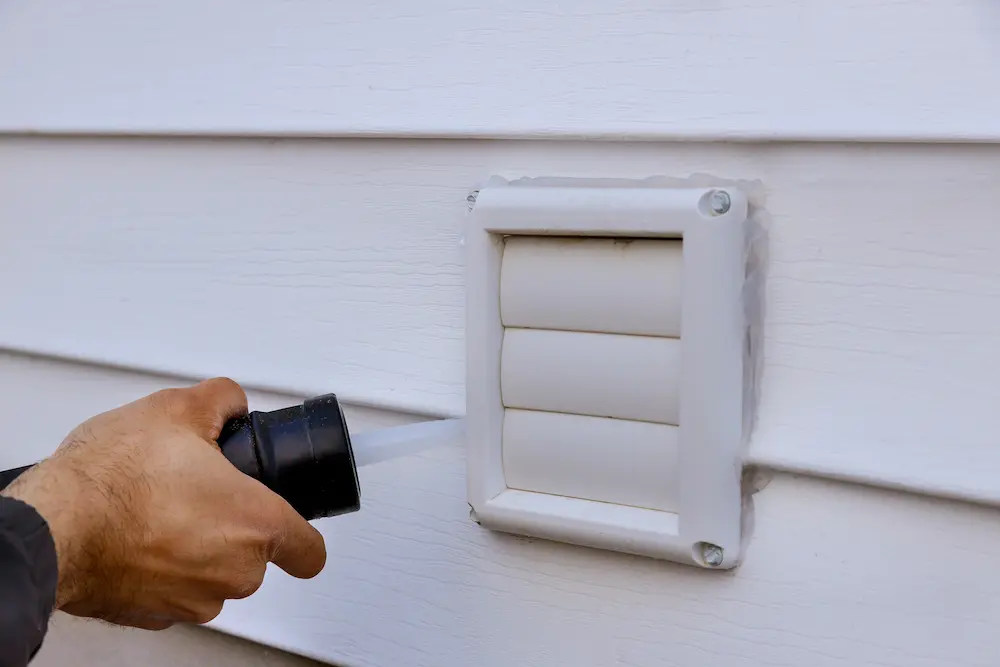
That lint has to go somewhere. It starts in the trap, the part you (hopefully) clean after every cycle, but a significant amount keeps traveling deeper into the vent line that runs from the back of your dryer all the way to the exterior of your building. Over time, that buildup becomes a serious fire hazard. Not a theoretical one. A real one.

Here’s what every Connecticut homeowner and property manager needs to understand about dryer vent fires, and what you can do about them.

The Numbers Don't Lie

Dryer fires aren’t rare. The National Fire Protection Association reports that tens of thousands of residential fires each year are attributed to dryers, and the leading cause isn’t a faulty machine or a defective part. It’s a failure to clean the vent. Lint is highly combustible. When it builds up inside a vent and airflow becomes restricted, heat has nowhere to go. That combination of trapped heat and a ready fuel source is exactly what a fire needs.

“Mike, our Owner and Operator, says: ‘I’ve been doing this work for over 28 years, and I still find myself surprised by how many homeowners don’t know that dryer vents need to be cleaned at all. It’s not their fault; nobody tells you this when you buy a house. But once you understand what’s actually happening inside that vent line, it becomes a very easy decision to stay on top of it.'”

In Connecticut, where older housing stock is common and vent runs can be long and convoluted, the risk is very real. Many homes in Fairfield, New Haven, and Litchfield Counties were built decades ago with vent configurations that simply weren’t designed around today’s high-efficiency dryers. A modern machine pushing more air and heat through aging ductwork is a recipe for accelerated lint buildup, and accelerated risk.

Warning Signs You Should Never Ignore

The good news is that your dryer will usually tell you something is wrong before a fire does. Pay attention to these red flags.
Your clothes are taking more than one cycle to dry.

This is the most common sign of a restricted vent. When airflow is compromised, moisture can't escape efficiently, so the dryer runs longer and hotter.

The dryer itself feels unusually hot to the touch, or your laundry room feels warmer than normal after a cycle.

Excess heat that has nowhere to go starts showing up in places it shouldn't.

You notice a burning smell during or after a cycle.

That odor is lint getting too close to dangerous temperatures. Stop the dryer and call us.

The exterior vent flap isn't opening properly during operation.

This often signals a blockage somewhere along the line.

“Mike suggests taking the symptoms seriously even if they seem minor: ‘A dryer that’s just running a little longer than usual doesn’t sound like an emergency, but it can be a warning sign that something is building up in the line. We’d much rather come out and tell you everything looks fine than have someone ignore it and end up with a much bigger problem.'”

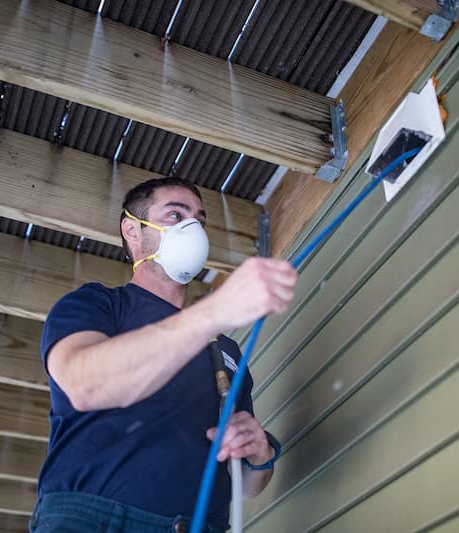
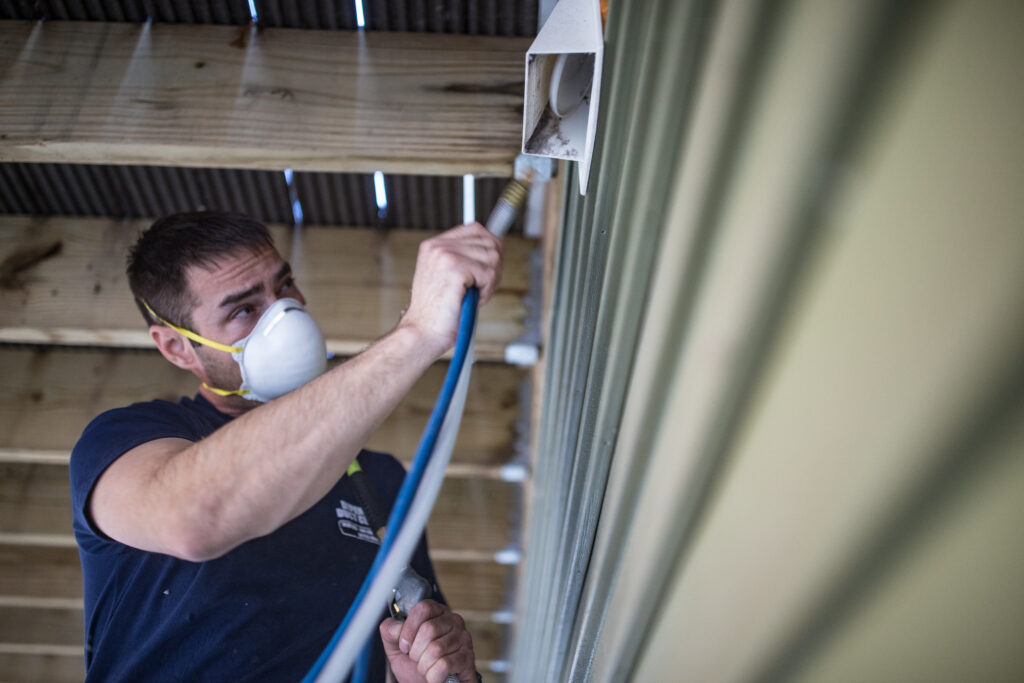
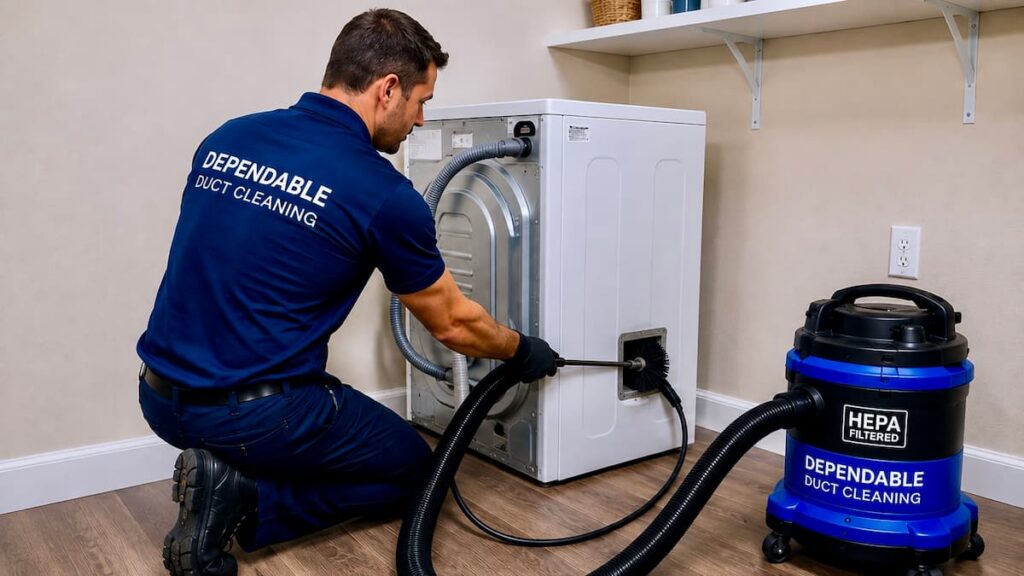
If any of these sound familiar, don’t wait. Our dryer vent cleaning service removes the full buildup from the vent line, from behind the dryer all the way to the exterior exhaust, restoring proper airflow and significantly reducing your fire risk.

A Special Note for Property Managers

If you manage a multi-family building, a condo association, or any residential property with shared laundry, the stakes are higher. Commercial-use dryers run more cycles, generate more lint, and when the vent system serves multiple units, can accumulate dangerous buildup faster than any single-family home.

Many property managers are unaware that building codes and insurance policies may require regular maintenance of dryer vents. A fire in a shared laundry room doesn’t just damage property. It puts tenants at risk and creates significant liability.

“Mike recommends that property managers treat dryer vent cleaning the same way they treat any other scheduled building maintenance: ‘You wouldn’t skip annual inspections on your fire suppression system. The dryer vents deserve the same attention. We can set up a maintenance schedule, document every visit, and make sure you have the records you need if your insurance company ever comes asking.'”

We work with property managers throughout our Connecticut service area to set up maintenance schedules that keep buildings safe, compliant, and running efficiently. We offer flexible scheduling and can document every service visit for your records.

The Installation Factor

Not all dryer vent problems start with neglect. Some start with improper installation. Flexible plastic or foil duct, excessive bends, or runs that are simply too long all reduce airflow and accelerate lint accumulation. If your current setup is working against you, our dryer vent installation service can fix that.

“Mike thinks the installation piece is more important than most people realize: ‘We see a lot of homes where the vent was installed with the wrong materials or too many turns in the line. The dryer is fighting the whole system every single cycle. Getting the installation right is the foundation. The cleaning keeps it that way.'”

We use rigid metal ducting, plan the most direct route to the exterior, and seal every connection properly, giving your dryer a clear, efficient path to operate safely.

How Often Should You Have Your Dryer Vent Cleaned?

For most residential homes, once a year is the standard recommendation. If you do a high volume of laundry, have a long vent run, or use your dryer daily, you may need service more frequently. Not sure where you stand? Check out our FAQ page and when in doubt, give us a call. We’ll give you an honest answer, not a sales pitch.
We're Your Neighbors. We'll Be Straight With You.

At Dependable Duct Cleaning, we’ve been serving Connecticut homeowners and businesses for over 28 years. We’re a family-owned company, not a national chain, and our reputation in Fairfield County is built on showing up on time, doing the job right, and treating your home like our own. That means we’re not going to tell you that you need a service you don’t. But we will tell you when something is genuinely unsafe.

A clogged dryer vent is one of those things.

“Mike believes this kind of honesty is what keeps customers coming back: ‘We have customers who’ve been calling us for 10, 15 years. That doesn’t happen if you’re not straight with people. Our whole business is built on the idea that if we take care of you, you’ll take care of us. It really is that simple.'”

Get your free estimate today, or call us directly at (203) 364-1950). Clean vents. Safe homes. That’s what we’re here for, and we back every job with our satisfaction guarantee.
Category:

Share On :

Dryer Vent Fire Hazards: What Every CT Homeowner and Property Manager Needs to Know

Your dryer works hard. Load after load, year after year, it’s one of the most-used appliances in any home or multi-unit building. And every single time it runs, it generates something you can’t see but absolutely cannot ignore: lint.

That lint has to go somewhere. It starts in the trap, the part you (hopefully) clean after every cycle, but a significant amount keeps traveling deeper into the vent line that runs from the back of your dryer all the way to the exterior of your building. Over time, that buildup becomes a serious fire hazard. Not a theoretical one. A real one.

Here’s what every Connecticut homeowner and property manager needs to understand about dryer vent fires, and what you can do about them.

The Numbers Don't Lie

Dryer fires aren’t rare. The National Fire Protection Association reports that tens of thousands of residential fires each year are attributed to dryers, and the leading cause isn’t a faulty machine or a defective part. It’s a failure to clean the vent. Lint is highly combustible. When it builds up inside a vent and airflow becomes restricted, heat has nowhere to go. That combination of trapped heat and a ready fuel source is exactly what a fire needs.

“Mike, our Owner and Operator, says: ‘I’ve been doing this work for over 28 years, and I still find myself surprised by how many homeowners don’t know that dryer vents need to be cleaned at all. It’s not their fault; nobody tells you this when you buy a house. But once you understand what’s actually happening inside that vent line, it becomes a very easy decision to stay on top of it.'”

In Connecticut, where older housing stock is common and vent runs can be long and convoluted, the risk is very real. Many homes in Fairfield, New Haven, and Litchfield Counties were built decades ago with vent configurations that simply weren’t designed around today’s high-efficiency dryers. A modern machine pushing more air and heat through aging ductwork is a recipe for accelerated lint buildup, and accelerated risk.

Warning Signs You Should Never Ignore

The good news is that your dryer will usually tell you something is wrong before a fire does. Pay attention to these red flags.

Your clothes are taking more than one cycle to dry.

This is the most common sign of a restricted vent. When airflow is compromised, moisture can't escape efficiently, so the dryer runs longer and hotter.

The dryer itself feels unusually hot to the touch, or your laundry room feels warmer than normal after a cycle.

Excess heat that has nowhere to go starts showing up in places it shouldn't.

You notice a burning smell during or after a cycle.

That odor is lint getting too close to dangerous temperatures. Stop the dryer and call us.

The exterior vent flap isn't opening properly during operation.

This often signals a blockage somewhere along the line.

“Mike suggests taking the symptoms seriously even if they seem minor: ‘A dryer that’s just running a little longer than usual doesn’t sound like an emergency, but it can be a warning sign that something is building up in the line. We’d much rather come out and tell you everything looks fine than have someone ignore it and end up with a much bigger problem.'”

If any of these sound familiar, don’t wait. Our dryer vent cleaning service removes the full buildup from the vent line, from behind the dryer all the way to the exterior exhaust, restoring proper airflow and significantly reducing your fire risk.

A Special Note for Property Managers

If you manage a multi-family building, a condo association, or any residential property with shared laundry, the stakes are higher. Commercial-use dryers run more cycles, generate more lint, and when the vent system serves multiple units, can accumulate dangerous buildup faster than any single-family home.

Many property managers are unaware that building codes and insurance policies may require regular maintenance of dryer vents. A fire in a shared laundry room doesn’t just damage property. It puts tenants at risk and creates significant liability.

“Mike recommends that property managers treat dryer vent cleaning the same way they treat any other scheduled building maintenance: ‘You wouldn’t skip annual inspections on your fire suppression system. The dryer vents deserve the same attention. We can set up a maintenance schedule, document every visit, and make sure you have the records you need if your insurance company ever comes asking.'”

We work with property managers throughout our Connecticut service area to set up maintenance schedules that keep buildings safe, compliant, and running efficiently. We offer flexible scheduling and can document every service visit for your records.

The Installation Factor

Not all dryer vent problems start with neglect. Some start with improper installation. Flexible plastic or foil duct, excessive bends, or runs that are simply too long all reduce airflow and accelerate lint accumulation. If your current setup is working against you, our dryer vent installation service can fix that.

“Mike thinks the installation piece is more important than most people realize: ‘We see a lot of homes where the vent was installed with the wrong materials or too many turns in the line. The dryer is fighting the whole system every single cycle. Getting the installation right is the foundation. The cleaning keeps it that way.'”

We use rigid metal ducting, plan the most direct route to the exterior, and seal every connection properly, giving your dryer a clear, efficient path to operate safely.

How Often Should You Have Your Dryer Vent Cleaned?

For most residential homes, once a year is the standard recommendation. If you do a high volume of laundry, have a long vent run, or use your dryer daily, you may need service more frequently. Not sure where you stand? Check out our FAQ page and when in doubt, give us a call. We’ll give you an honest answer, not a sales pitch.

We're Your Neighbors. We'll Be Straight With You.

At Dependable Duct Cleaning, we’ve been serving Connecticut homeowners and businesses for over 28 years. We’re a family-owned company, not a national chain, and our reputation in Fairfield County is built on showing up on time, doing the job right, and treating your home like our own. That means we’re not going to tell you that you need a service you don’t. But we will tell you when something is genuinely unsafe.

A clogged dryer vent is one of those things.

“Mike believes this kind of honesty is what keeps customers coming back: ‘We have customers who’ve been calling us for 10, 15 years. That doesn’t happen if you’re not straight with people. Our whole business is built on the idea that if we take care of you, you’ll take care of us. It really is that simple.'”

Get your free estimate today, or call us directly at (203) 364-1950). Clean vents. Safe homes. That’s what we’re here for, and we back every job with our satisfaction guarantee.
Category:

Uncategorized

Share On :